Maria
Reason for consultation:
Total rehabilitation of the maxilla and restoration of the function and aesthetics of the dentition
Condition at presentation:
- An existing metal-ceramic fixed dental prosthesis
- Gingival inflammation in the area of the fixed dental prosthesis
- Significant periapical changes involving all abutment teeth
- Unfavourable prognosis for the preservation of the abutment teeth
#implant placement#oral surgery#all-on-6#full-mouth rehabilitation
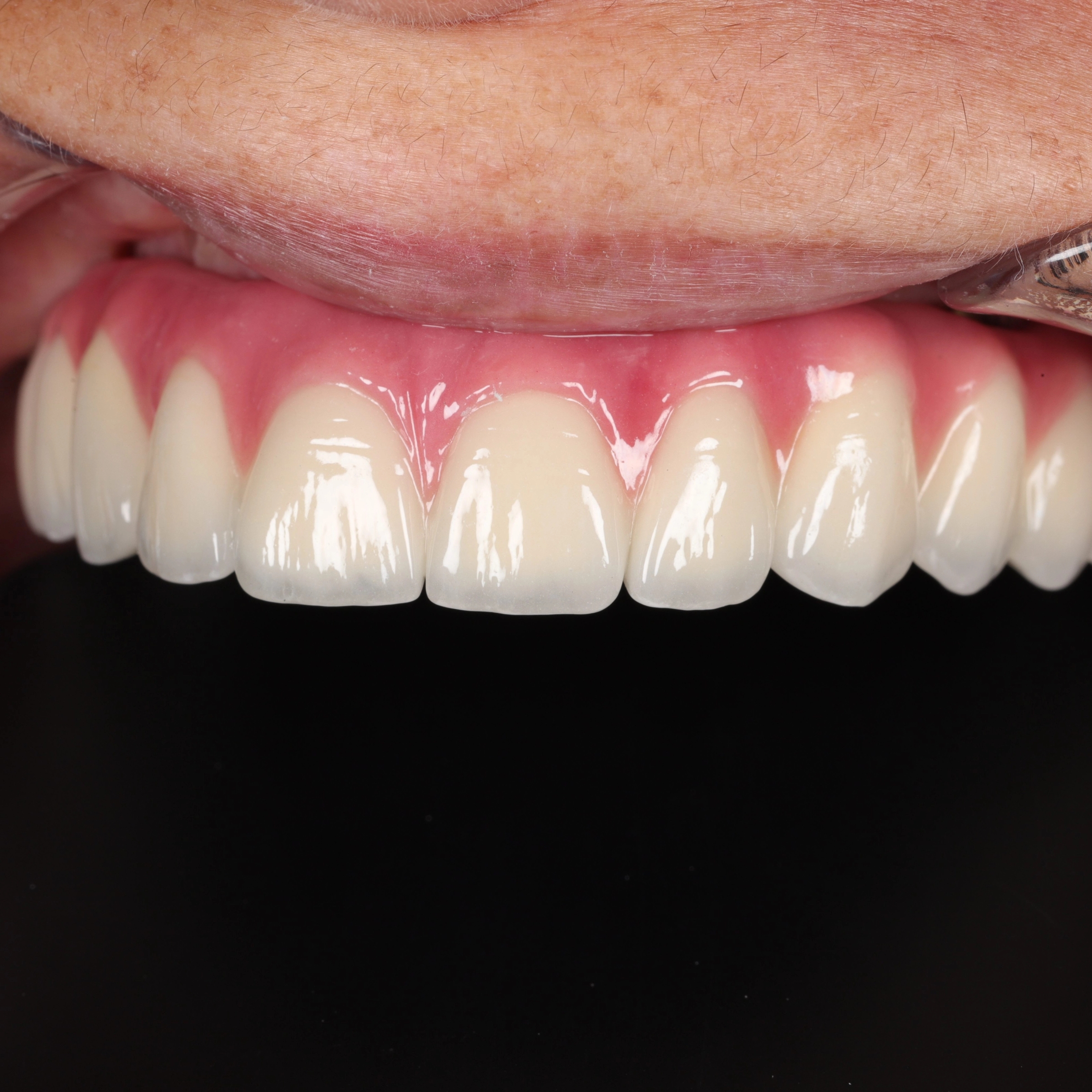
Process stages
Pre-treatment condition
Clinical presentation:
The patient presented with a metal-ceramic fixed dental prosthesis in the maxilla. Clinical and radiographic examination revealed gingival inflammation and significant periapical changes associated with all abutment teeth, indicating that long-term preservation of these teeth was not feasible.
Treatment objective:
To perform complete rehabilitation of the maxilla using a modern implant placement protocol and establish a reliable foundation for a fixed prosthetic restoration.
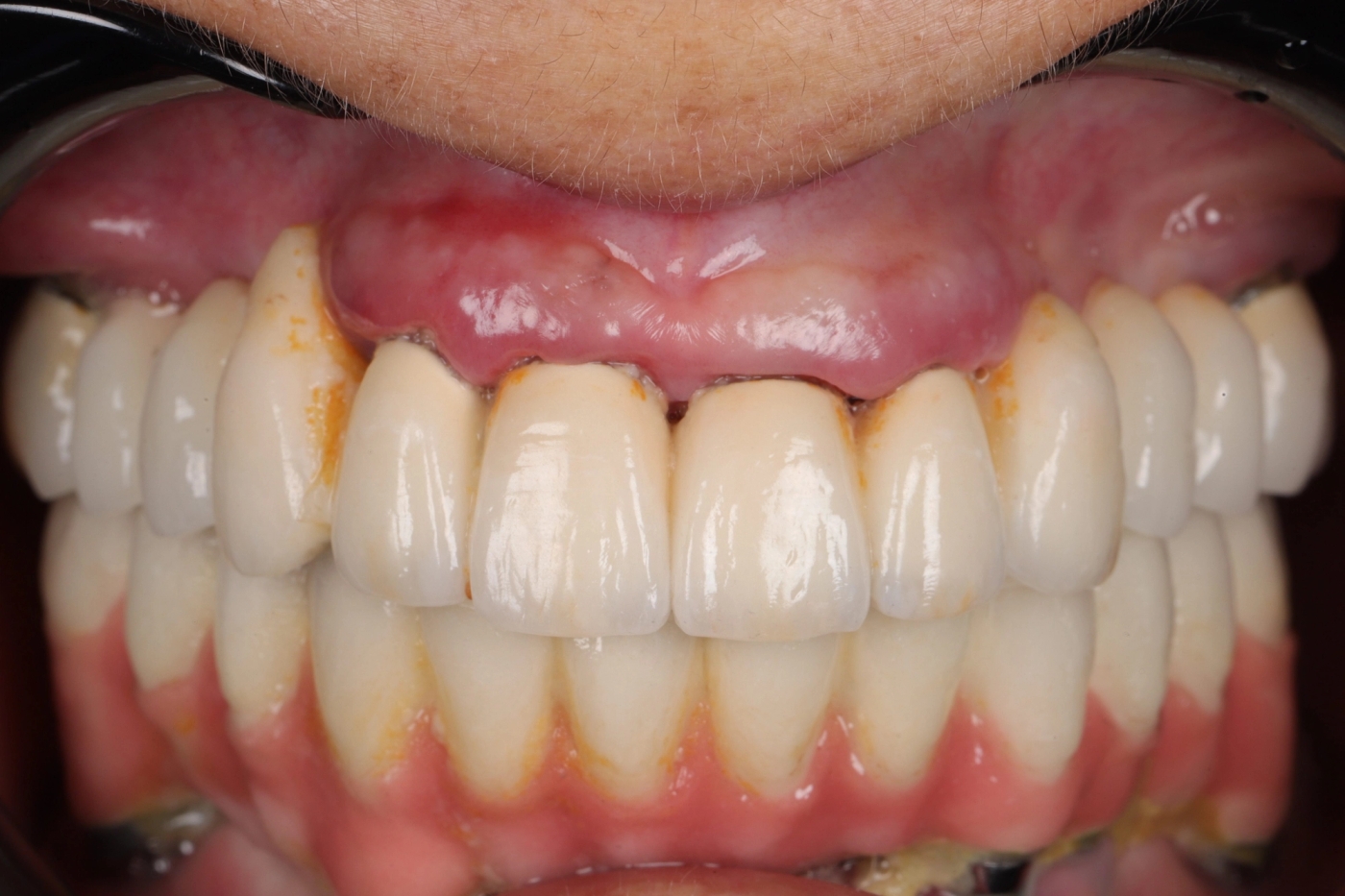
Tooth extraction and immediate implant placement according to the All-on-6 concept
Procedure performed:
The existing fixed bridge was removed, atraumatic extraction of all teeth with an unfavourable prognosis was performed, followed by immediate placement of six dental implants according to the All-on-6 concept.
Treatment objective:
To provide stable support for the future prosthetic restoration and minimise the treatment duration through immediate implant placement.
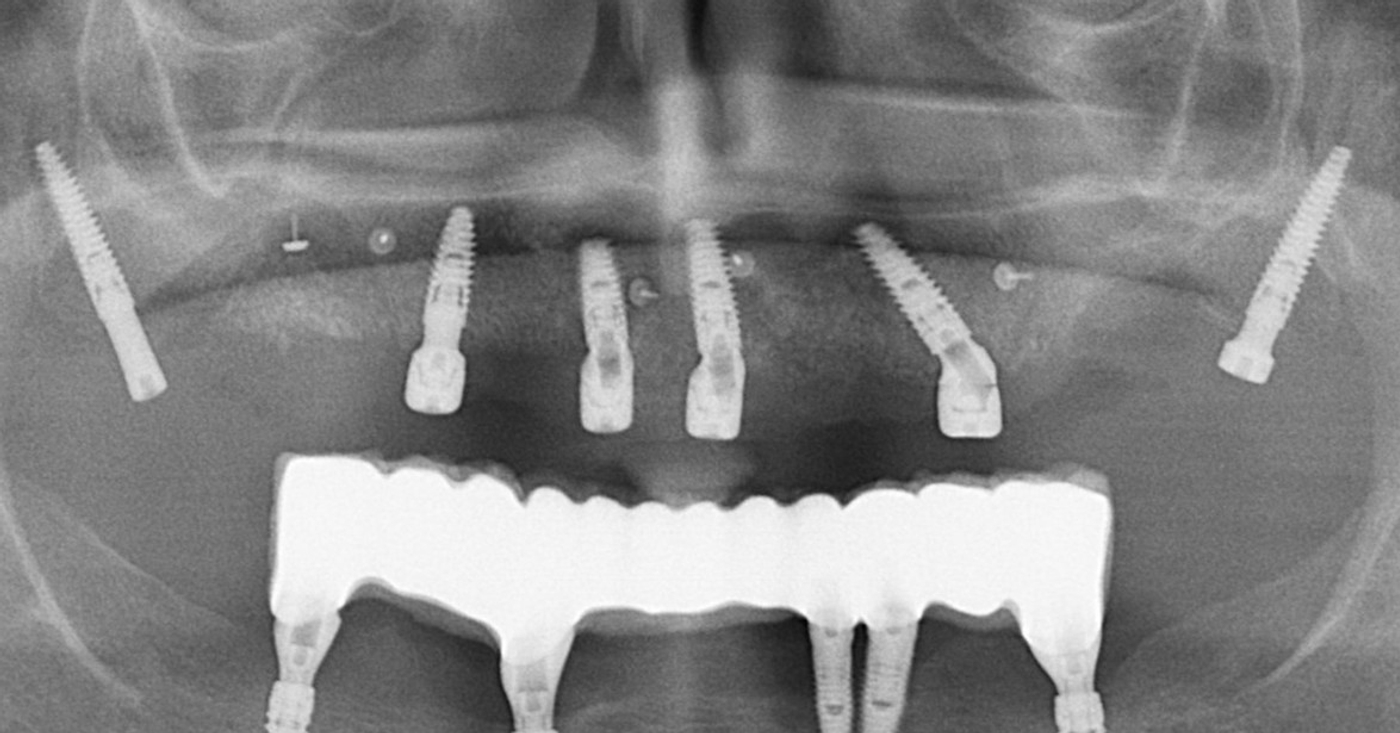
Placement of a temporary implant-supported prosthetic restoration
Procedure performed:
Following implant placement, a temporary fixed prosthetic restoration was fabricated and delivered, providing restoration of masticatory function and aesthetics during the osseointegration period.
Treatment objective:
To provide comfortable conditions for the patient during the implant healing period and to ensure proper soft tissue contouring.
Duration:
The osseointegration period lasted 6 months.
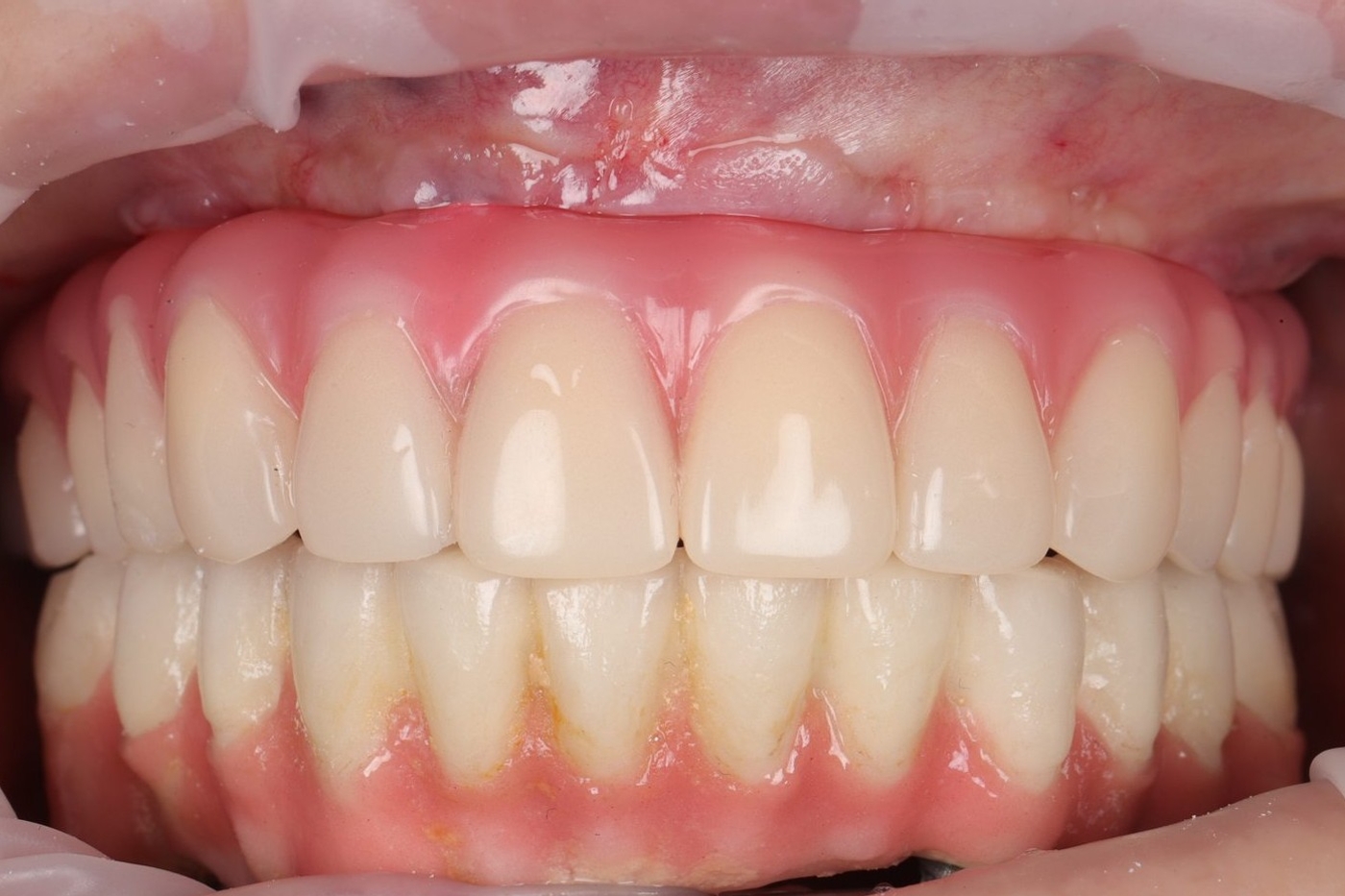
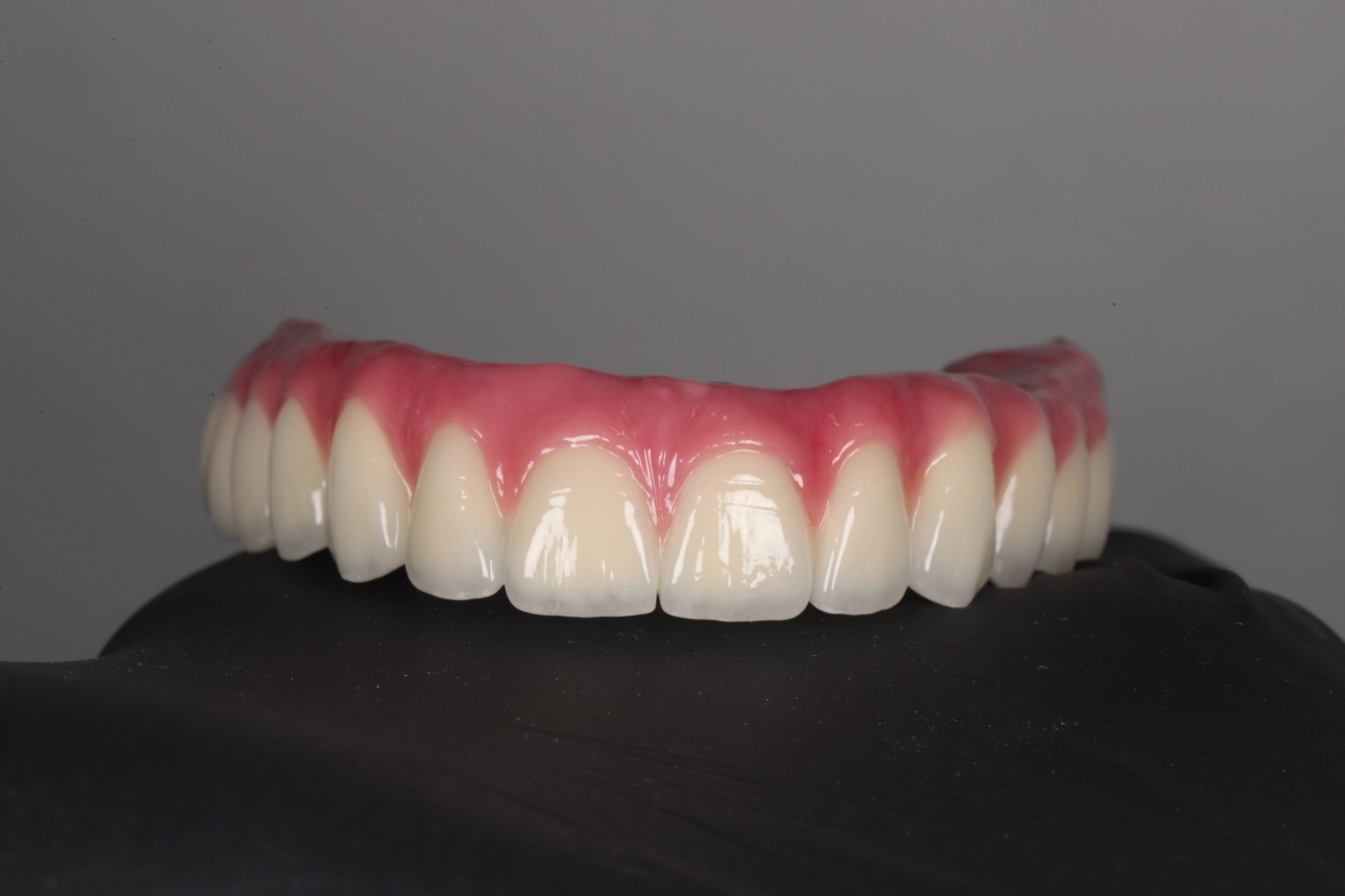
Fabrication of the final prosthetic restoration
Process:
Following completion of osseointegration, digital scanning was performed and a customised definitive prosthetic restoration was fabricated, taking into account the patient’s anatomical characteristics, occlusion, and aesthetic preferences.
Treatment objective:
To create a functional, high-strength, and aesthetic fixed prosthetic restoration for long-term use.
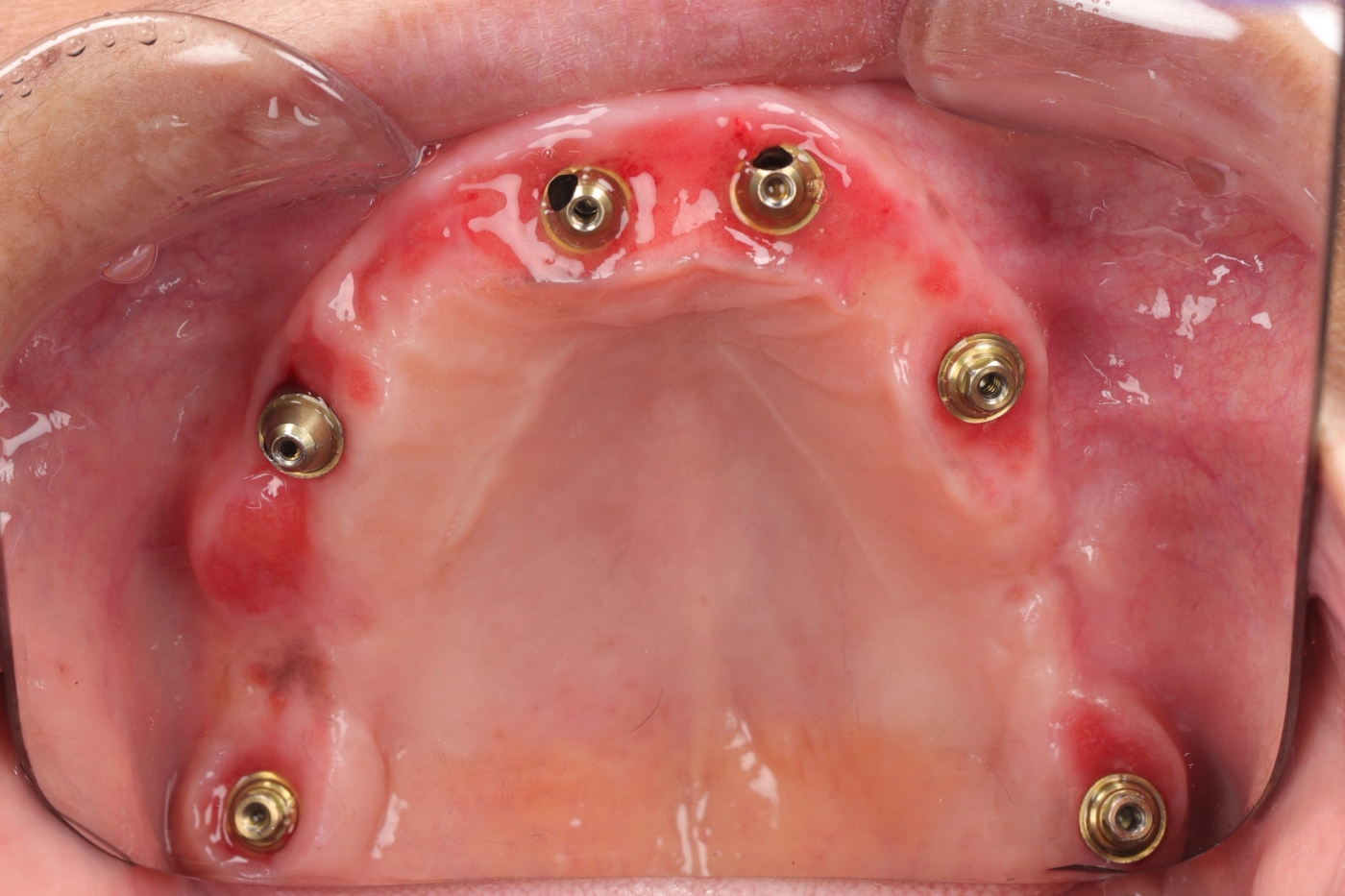
Soft tissue condition prior to delivery of the definitive prosthetic restoration
Clinical presentation:
After six months of healing, the mucosa was healthy, with no signs of inflammation. The gingival tissues had properly formed around the implants, creating optimal conditions for delivery of the definitive prosthetic restoration.
Treatment objective:
To assess the condition of the soft tissues and confirm their readiness for the final stage of prosthodontic rehabilitation.
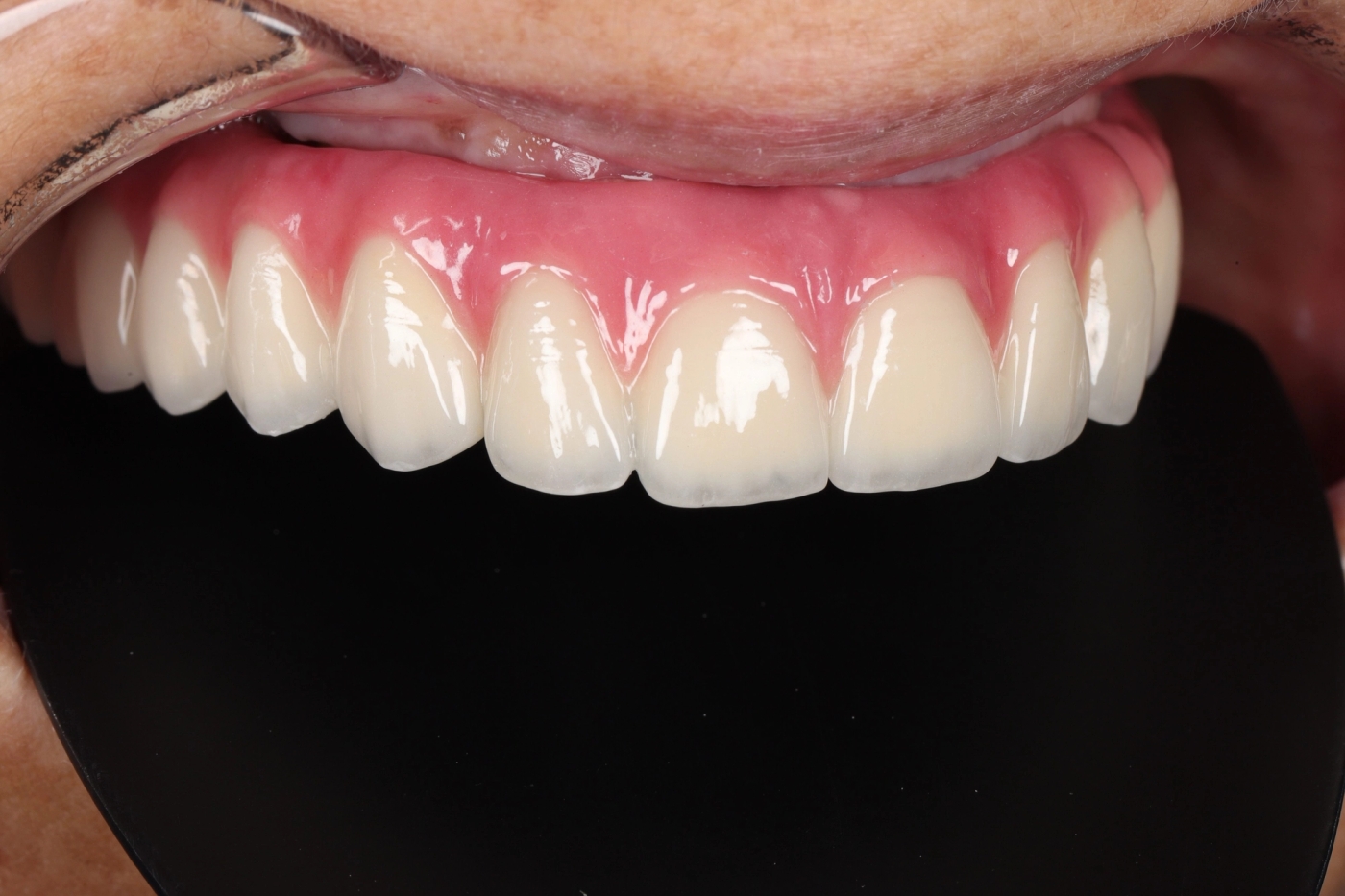
Placement of the final prosthetic restoration supported on a titanium bar
Process:
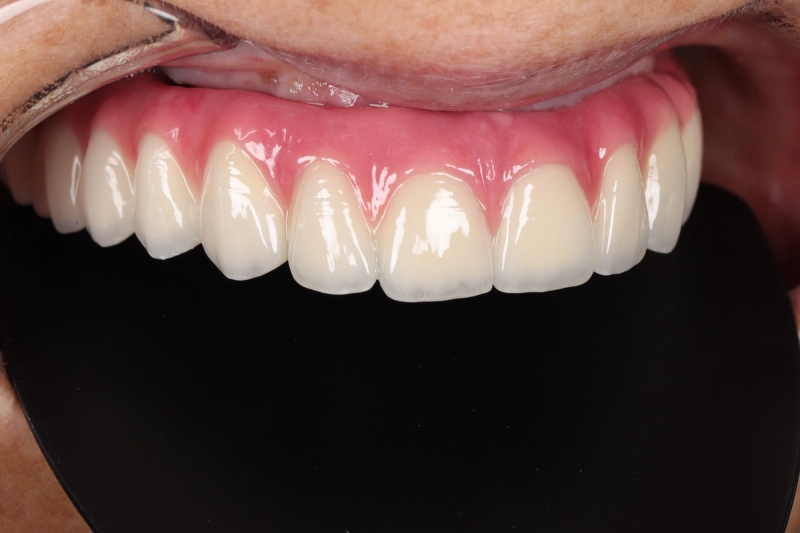
The prosthetic restoration was tried in, passive fit was verified, occlusal contacts were assessed, and the final fixed prosthesis was delivered and secured on the titanium bar.
Outcome:
The function of the dentition, masticatory efficiency, and smile aesthetics were fully restored. The patient received a stable fixed prosthetic restoration with a natural appearance, proper distribution of occlusal forces, and a high level of comfort in daily life.
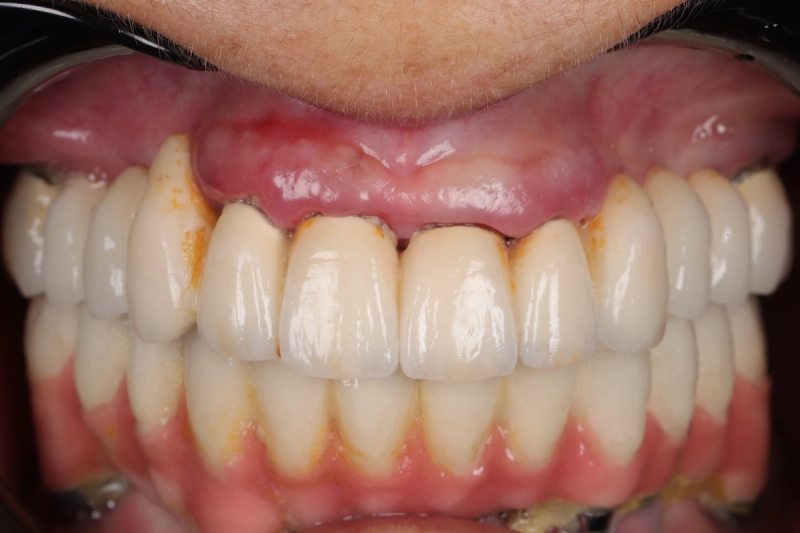 Before
 After
AfterBook a consultation
Fill out the form — our administrator will contact you and schedule a convenient time.